
When building impact models, the first step is to pause and determine what has value, what is worth protecting.
« In this improvised, undisciplined army, men who could have stayed home continually risked their lives, showing remarkable courage. It would be hard to explain such behavior without invoking this religion of human happiness, this mysticism of unbelievers that so often stirred the crowds of 1871.”
Thalès C. (1924) La Commune de 1871, Paris, Librairie du Travail; rééditions Spartacus, 1971, p 163
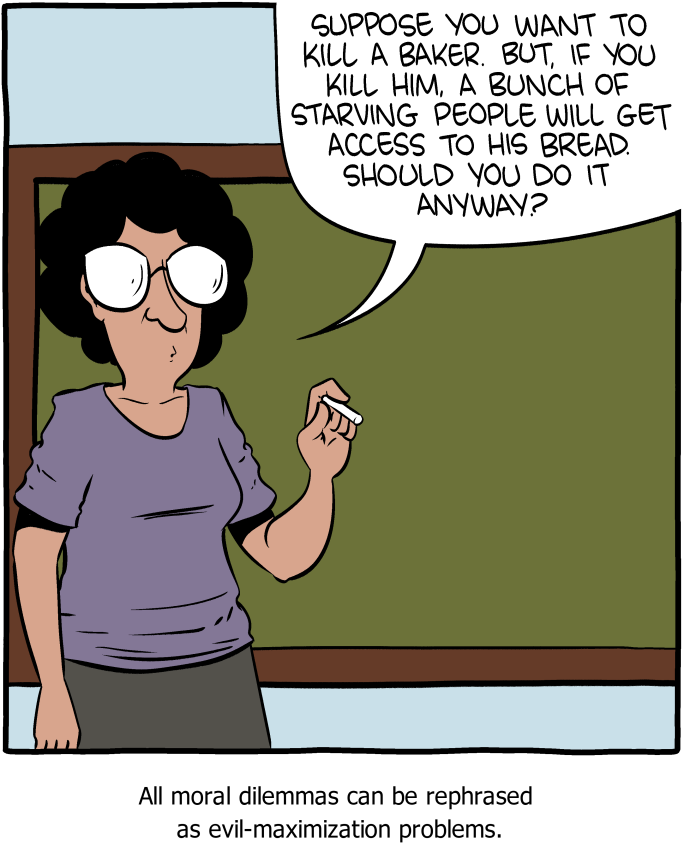
What matters? What should be counted? What is the right thing to do? What has value? These are the persistent concerns of moral philosophy and ethics. First, this point must be emphasized: we worry about what ought to be done. This was not a necessity, but it is our condition, and we must deal with it. If we reject the more or less didactic manuals that are the sacred texts of monotheisms, we indeed find ourselves in a void, “the anarchic condition” [1], in the sense of Frédéric Lordon:
“If it is true that we live according to values, how are we to live if we are uncertain about the value of values? The great question of a critical axiology, that is, of a theory of the anarchic condition, is precisely this: how does a society hold together when it holds onto nothing?” [1].
It is indeed deeply unsettling to realize that, beyond a strong intuition, it is difficult for us to explain why saving a drowning child is “good.”
From an evolutionary perspective, values can be seen as products of adaptation. A group of humans organized around certain values may have outcompeted another group whose fundamental values were different. The incest taboo is one possible example of a value associated with an evolutionary advantage in the history of the genus Homo. Human groups that did not institutionalize this value would have been weakened by genetically harmful levels of inbreeding. In light of the environmental, social, and anthropological crisis currently affecting 21st-century capitalist societies, it seems that we are at a turning point in the evolution of values—a possible major extinction of certain hegemonic values.
The hegemonic ethics of the neoliberal capitalist era is a syncretism that identifies self-development and the accumulation of material and symbolic goods as the supreme desirable value. It is a syncretism because it draws on a mix of principles originating in neoliberal management theories (everyone is the manager of their own life) and the New Age movement, itself a syncretism combining, ad libitum, all imaginable spiritualities. Every human being born today is launched into a quest to climb the ranks of a hierarchical capitalist society by mobilizing all kinds of resources: humans, animals, ecosystems, “energies,” and so on. In a striking and entirely understandable return, New Age spirituality literally offers us the possibility of mobilizing the “energies” of the cosmos to our advantage in this upward quest. Let us pause to note the staggering contrast between the radiant tone of gurus explaining how to attract success and the terrifying implication of this possibility: if you can manipulate the cosmos to bring yourself success (that is, money and social status in most cases), then you are also manipulating it against others. You are quite literally mobilizing the cosmos against others in the name of your success. The idea is not new, but it was previously treated as witchcraft—punishable and contemptible. The novelty lies in its transformation into a positive, desirable, normalized idea, marking the evolution of hegemonic values across different forms of social organization over time.
These pseudo-spiritual delusions, combined with the proliferation of self-help, biohacking, and constant self-optimization, constitute the latest weapons available in the personal arms race to avoid downward mobility. For more than an upward quest, human life under capitalism resembles a treadmill pulling us downward in the hierarchy, forcing us to mobilize all resources—even the cosmos—just to stay in place. Like in a video game where the player unlocks increasingly powerful weapons at each level, it seems that granting access to the cosmos and the gods signals that the end of the game is near.
Unconditional personal success, refusing no form of exploitation of others, thus appears as the ultimate value—the quantity to be maximized.
But we should not fall into philosophical idealism and believe that this value descends from the realm of ideas to impose itself naturally. A hegemonic ethic is the average direction of an average individual, produced by the crystallization of shared desires and affects. If it dominates, it is because it imposes itself as desirable. This is the fundamental reversal proposed by Spinoza in the Ethics: “We do not desire something because we judge it good; rather, we judge it good because we desire it.” This relentless reversal is further developed by Lordon to explain the institutionalization of collective values through the effects of the multitude’s affects upon itself. It has long been shown by Marx—and by non-Marxists such as Bourdieu—how hegemonic values are those necessary to maintain the dominance of the ruling class. They are thus promoted positively through capitalist propaganda, which is axiological (defining what is desirable), but also negatively through the reality of the treadmill that constantly threatens us. This latter point is crucial and is evident daily in people’s levels of exhaustion, frustration, and stress—symptoms that reflect a fear of falling rather than a desire to rise, like cattle struggling in a slaughterhouse. The underlying primary desire is the avoidance of suffering at all costs, even if it means harming others. Personal fulfillment through accumulation appears as an end, as a value (“he is a great man, he succeeded, he accumulated wealth, admirable, etc.”), while suffering remains in the background as the true measure guiding our choices.
Such a system institutionalizes the prisoner’s dilemma, encouraging exploitation on the assumption that others would exploit us, and perpetuates itself easily until the generalized exhaustion of humans, animals, and their environments.
So at this turning point in the evolution of values, what ethics should replace the capitalist ethic of self-optimization through the exploitation of others? In the axiological void we have acknowledged, we cannot speak of a “true” ethics determined by reason as the one to which everything naturally adheres. We must recognize the purely functional character of ethics, which then becomes a tool. Where political institutions write a constitution that determines the organization of society, we must move one level higher and rewrite an ethics that will shape the organization of desires and choices.
We must immediately acknowledge that this approach is largely a thought experiment. There is an obvious tension in claiming that ethics emerge from material conditions and social relations in the organization of society’s reproduction, while at the same time suggesting that we could choose them. I allow myself this small idealist-materialist exercise and take the opportunity to probe the ethics I find myself inclined to desire.
The hedonistic utilitarian approach, which holds that an action is good insofar as it promotes pleasure or happiness and bad when it produces suffering, is an interesting starting point for our inquiry. It quickly becomes apparent that utilitarianism, despite its apparent relativism, requires us to treat suffering as the absolute unit for evaluating all actions. It thus does not escape the need to define an absolute, even if that absolute is not located at the level of actions themselves, as in deontological approaches. Deontology—of which Kant’s categorical imperatives are an example—does not define a quantity to minimize/maximize but instead establishes prohibitions and duties in absolute terms, independent of outcomes.
Any ethics seems to consist of adopting, modifying, or recombining either utilitarianism or deontology. The good can only be defined either as that which maximizes a certain quantity without further consideration, or as that which follows strict rules regardless of consequences—or perhaps in a combined version that maximizes under constraints. This last case deserves attention because it presents a clear tension. If we decide on a quantity to maximize, why impose a categorical constraint on it—unless we were mistaken about the true Nature of what we seek to maximize? Hedonistic utilitarians, beginning with John Stuart Mill, have consistently had to qualify, hierarchize, and condition the pursuit of pleasure and happiness: intellectual pleasures are superior to bodily pleasures, the pleasures of personal fulfillment superior to fleeting ones, etc. [2]. Clearly, the mathematics of maximizing happiness is more complex than it first appears. What remains certain is that such utilitarianism is not a simplistic pursuit of immediate personal pleasure but implies a deep attention to the world and to others. The dispute between hedonists (seeking pleasure) and eudaimonists (seeking happiness) can be set aside for now. Both primarily debate the definitions of these terms; I prefer to unite them in a common aim: the reduction of suffering in all its forms—physical, psychological, moral, or existential.
In contrast to utilitarianism, what would a deontology capable of addressing the current crisis look like? What would its imperatives be? At first glance, a “biblical commandments”-type deontology—“you shall not cut trees,” “you shall not kill,” etc.—seems too rigid. If the goal is to propose an ethics that preserves a livable biophysical environment, such rigid commandments would struggle to adapt to the changing and evolving Nature of our environment. Another version might be a quota-based deontology: “You shall not emit more than X kg of CO₂ in your lifetime,” “You shall not use more than X hectares to feed yourself.” These “individual quota” imperatives could, for instance, align with the nine planetary boundaries, which quantify the biophysical limits for a “safe” ecosystem for humanity’s development. A recent revision of these boundaries has incorporated a dimension of “justice,” more explicitly accounting for geographical and social disparities in how environmental crises affect populations worldwide [3]. A non-anthropocentric version of such limits and quota-based imperatives could also be proposed. However, it must be emphasized that such a deontology would closely resemble a disguised utilitarianism. Defining the quota value X involves prior calculation and ultimately concerns the minimization of a quantity, itself dependent on defining desirable states of the Earth’s ecosystem.
So why choose suffering as the quantity to minimize? J. S. Mill argues that it is enough to observe empirically that human beings ultimately pursue pleasure and joy and avoid suffering, in order to define the absence of suffering as the utility to be maximized in a utilitarian framework concerned with the consequences of actions. Possible objections invoke destructive behaviors, self-harm, or the preference for physical pain over boredom [4]. These do not hold once we recognize that such apparent deviations merely mask an even greater suffering. The relevance of pain as a quantity of interest is all the stronger given that this observation seems to extend beyond humans to all sentient beings. In our inability to fully place ourselves in the position of other living beings, the aversion of sentient beings to suffering nevertheless appears as a constant that unites us. Note that the empirical observation of this aversion does not allow us to deduce that suffering naturally imposes itself as a universal moral measure, but it does offer a possibility for organizing our ethics around a shared constant.
Jeremy Bentham was convinced of this: the capacity to suffer makes a sentient being a moral individual worthy of respect, whereas intelligence, consciousness, or other measures of representational complexity do not enter into consideration (except insofar as they contribute to the capacity to suffer, to be hindered in one’s striving to live) [5]. To support this, he noted that an adult horse may possess a more developed intellect than a human infant, which should not prevent us from considering the infant at least as worthy of respect as the horse (which most people, in fact, do not). Some argue that the criterion of intelligence should be applied in terms of an individual’s potential to reach a certain level of intelligence in the future. But what about humans whose cognitive functions are impaired by disabilities? Others then suggest that the criterion should apply relative to the average capacities of a species. This seems an unconvincing sleight of hand. Why the species? Why not a broader taxon—the family, the phylogenetic order? The species has no intrinsic biological reality; there are only populations of individuals diverging genetically at different rates. One would need considerable courage to search through the immense “bush” of life for a metric upon which to ground value. A utilitarianism maximizing the complexity of life? What complexity? Is it more complex to be a grass species with multiple gene copies resulting from polyploidy, or to perceive a wide portion of the light spectrum? “Nature” has no direction. We must recognize how little the world—and our perception of it—offers us, apart from suffering, as a foundation for ethics.
More generally, ethical proposals centered on life (biocentrism) or “Nature” (ecocentrism) seem particularly ineffective and can lead to disturbing conclusions. As mentioned in a previous article, David Foreman, a prominent figure of ecocentrism with his “Earth First!” movement, illustrated these potential drifts when he stated, regarding the famine that struck Ethiopia in the late 1980s, that we should “let Nature regain its ‘balance”, by letting people die. He later partly retracted these remarks, acknowledging them as cruel and inappropriate. Yet these statements are not an aberration or an extreme deviation; rather, they should be the norm within a strictly ecocentric perspective. Ethics that center on such poorly defined concepts as Nature or life tend to push us toward trade-offs against humans, who are themselves then excluded from Nature. It is worth noting that even if a major figure of deep ecology like Arne Naess emphasized that humans are part of Nature and clarified his opposition to the excesses of social Darwinism or eco-fascism [6], practical implementations of these philosophies seem bound to produce “David Foreman–type” statements. The less extreme but more common versions are the familiar phrases: “Nature is taking back its rights,” “Mother Nature is taking revenge,” “Humans are a virus for the Earth,” and so on.
A clear tension emerges: ecocentrism and biocentrism, in practice, require moderation to avoid troubling conclusions. There is an implicit admission in our discomfort—in that of Foreman or Naess—in fully embracing these ethics. Once again, how can we justify choosing an ethical framework if we must temper it because its conclusions are disturbing? Let us immediately dispel a widespread idea: that moderation or “nuance” is desirable in our search for an ethical system. This objection makes no sense, because the definition of what is “desirable” is entirely contained within the ethical framework itself. If you must moderate your minimization, it is because you are not minimizing the right thing—that you have not correctly identified it. If moderation were itself a component of our ethics, we would then be dealing with virtue ethics, often presented as a third path alongside deontology and utilitarianism. Virtue ethics does not establish categorical rules (as in deontology), nor does it define quantities to maximize (as in utilitarianism), but instead encourages individuals to adopt certain attitudes or “virtuous” character traits. But why? If encouraging honesty or benevolence is not simply an indirect way of reducing suffering or imposing a categorical imperative, then why would honesty itself be a value? A consistent utilitarian ethics must be applicable without moderation. One should be able to follow it to its extreme without discomfort. One should be able to be radically committed to reducing the suffering of sentient beings without hesitation. The only legitimate moderation arises from uncertainty about the actual consequences of actions—given the immense complexity of causal chains—not from the definition of value itself.
Another problematic aspect of biocentrism and ecocentrism appears when one affirms the intrinsic value of life and ecosystems while also including humans within them. One may then be tempted to judge human actions as good insofar as they align with the “principles” of life as we perceive them. This is the slippery slope of the appeal to Nature, which assigns value to something simply because it is “natural.” This leads to a host of reactionary positions opposing sexual freedom, self-determination, or the affirmation of identities different from those assigned at birth, on the grounds that such things are “against Nature.” Beyond the fact that these claims rest on a profound misunderstanding of the diversity and complexity of “Nature,” it must be asserted that this Nature does not exist as a normative authority, and that what is has no intrinsic power to determine what ought to be.
It is worth noting that if humans are indeed part of Nature and must submit to it, then the claim “homosexuality does not exist in Nature (which is meaningless—and even if it meant something, it would be largely false), therefore it must be opposed in humans” contradicts itself, since it exists in humans and therefore in Nature. If this presence were an “accidental anomaly” to be corrected, how could we take seriously the supposed organizing force that dictates the “laws of Nature” yet allows such an anomaly? Conversely, if humans are not part of Nature, why should its “principles” apply to them? The appeal to Nature has strongly resurfaced in New Age syncretism, where it remains a serious plague.
But then, does observing that all sentient beings share an impulse to avoid suffering—and using this to construct a value—not constitute an appeal to Nature based on a simple observation of what is? Perhaps. But if Nature encompasses everything, are we not forced to choose something that exists within it? And as noted earlier, the observation of this impulse does not grant it intrinsic truth; it merely provides a shared basis with other sentient beings upon which to build an ethics.
When Nietzsche proclaims, or rather acknowledges, the death of God at the end of a 19th century marked by political, scientific, and cultural revolutions, he leaves behind an immense axiological void, which he fills with an active nihilism. This active nihilism is carried by the “overman,” who creates his own values and deploys his will to power, his vital force. Attempts to mobilize Nietzsche’s thought in politics have been numerous and rarely turned out well—unsurprising given the fundamentally ultra-reactionary character of his philosophy. Domenico Losurdo devotes a monumental 1,088-page work [7] (as well as lectures and more accessible analyses [8]) to showing that, far from being a cryptic author to be read like music, Nietzsche is fully embedded in the reactionary currents of his time. Going beyond nationalism and scientific racism, Nietzsche’s aristocratic thought advocates freedom, emancipation, and the revaluation of values for a sacred elite capable of sublimation, while endorsing slavery and the “extermination of failures” for the profane world of the masses. This “rebellious aristocratic” thought is not a metaphorical vision of a mystical genius detached from the world, but rather the worldview of a ruling class horrified by mass revolutions. Nietzsche himself joined the Prussian forces in 1871 to participate in the suppression of the Paris Commune, which he saw as a terrifying symptom of a “servile and barbaric class that has come to regard its mode of existence as an injustice and is preparing to avenge its rights—not only for itself, but for all generations” [9,10]. Nietzsche opposed mass education and, more broadly, the very possibility that rationality—of which Descartes is seen as the father, and thus “the father of revolutions” ([10,11])—should guide progress:
“We have dwelled on this theme of the young Nietzsche’s antisemitism, inherited from Schopenhauer and Wagner, because it constitutes a focal point of the ideological corpus of the three authors: thus, the epistemological and moral optimism that Nietzsche attributes to the figure of Socrates derives directly from one of the principal criticisms that Schopenhauer directs at the Jews: their religion and thought propagate ‘infamous optimism.’ This belief that it is possible to know the world and transform it, this idea that morality rests on knowledge, and that it is therefore possible to overcome the ‘tragic vision’ of an irredeemably bad world—this is, according to Schopenhauer and Nietzsche, an extremely dangerous vision, since it risks having genuinely revolutionary consequences. One knows Schopenhauer’s reactions in 1848 and Nietzsche’s during the Paris Commune” [11].
Clearly, this nihilism, produced by a panicked bourgeois and aristocratic class, should not inspire us. Schopenhauer, Nietzsche’s early mentor, though marked by similar reactionary impulses, pushes philosophical pessimism to a more compelling extreme. He argues that suffering is inherent in the conflict between the wills of living beings, far outweighs pleasure or the unattainable happiness, and that annihilation is preferable to existence. Nothing redeems existence; there is no higher principle. Yet, unlike Nietzsche, he concludes that compassion—the secret bond uniting those who suffer (that is, those capable of suffering)—must form the foundation of ethics. And this is essential.
If we strip these two giant nihilists of their evident reactionary dimension—their fear of masses striving for a different life—how could we not accept nihilism itself, the exhaustion of values? How could we not share the pessimism of Camus’s absurd, which “arises from the confrontation between the human call and the unreasonable silence of the world” [12]? In this silence, in the face of the wills (Schopenhauer’s will to live, Nietzsche’s will to power, Spinoza’s conatus, etc.) of sentient beings, we must articulate a “benevolent sentiocentric nihilism.” If nothing has value, then we may use this shared impulse to avoid suffering as the compass for our actions. Sentiocentric nihilism may appear as an oxymoron, since nihilism should not admit any axiological qualification. But this is a linguistic shortcut masking a two-step ethical proposition:
- Nothing has value.
- Let us ensure that things are not too painful for everyone.
To complete this ethics, we must also mobilize another great critic of values: Spinoza. To minimize suffering and generate joy, we must understand the causal mechanisms that determine our actions, our desires, and our suffering—those that lead us to reproduce domination and to destroy our conditions of existence. Only the search for truth, driven by this “infamous optimism” (see above), and the struggle against ignorance of “the causes that determine us” can enable this.
Sentiocentric nihilism thus stands in direct opposition to the resurgence of the sacred and obscurantism in our time, which impose values against sentient beings and their desire not to suffer. This religious, racist, nationalist, ecocentric, or otherwise “sacred” thinking is naturally associated with obscurantism and distrust of science and causal inquiry. Such nihilism also opposes one of the most pervasive cognitive and philosophical reflexes: the belief in a just world. This belief asserts that everything happens for a reason, that things are as they should be, that those who succeed do so for a reason—by merit—and that those who “are nothing” and suffer do so for another reason (one may note the reference to a contemporary thinker). It is a deeply reactionary belief, justifying any state of affairs on the grounds that the world is “just.” Nihilism—and perhaps even more so its pessimism—condemns this comforting reflex in the face of the absurd and sweeps away any claim that the world is inherently just. There is nothing. Only wills striving not to suffer. This is a pessimism coupled with that “infamous optimism” of Descartes denounced by reactionary nihilists. In the end, it is a pessimism of reason combined with an optimism of the will, as prescribed by Gramsci.
In one of the most striking articles in moral philosophy [13], Peter Singer unsettles us by undermining our sense of being morally adequate according to the principles we believe we follow. His argument unfolds in several steps:
- Famine, death, and the suffering associated with them are fundamentally bad.
- If a child is drowning in a pond next to us, it is generally accepted that we ought to help. More broadly, we ought to prevent very bad things from happening to others if we can do so at relatively little cost to ourselves (for example, getting our feet wet or ruining a phone).
- In a globalized world, humanitarian programs allow anyone—through financial support—to reduce famine, death, and associated suffering. The reduction of suffering for those starving is far greater than the increase in suffering caused by the donor’s loss of resources. Just like the kid and the pond example.
- Therefore, combining 1, 2, and 3, we have a moral obligation to give a substantial portion of our income to such organizations. This is an obligation, not charity. Giving should be considered normal, and failing to give morally blameworthy. Yet this is not how charity is usually perceived: we admire those who give, but we do not condemn those who do not.
The argument appears difficult to refute, and Singer addresses many objections. One, however, is powerful: his ethical standard is too demanding. By these criteria, the vast majority of people are in constant moral failure—Singer included. What, then, is the point of such an ethics? If the standard is unattainable, and individuals can only approximate it without ever reaching it, why not lower the bar? A teacher who grades out of 20 but has never awarded a perfect score might reconsider what “20/20” means. But how would we revise the standard in ethics?
Still, the fact remains: most human behavior does not align with the ethical intuitions we claim to endorse (as in the drowning child example). If Singer’s argument is disturbing, it is not because it is flawed, but because it reveals our ethical inconsistency. This inconsistency becomes visible when we confront real-world decisions and dilemmas. It primarily challenges a depoliticized view of ethics—one that assumes it can be applied coherently as a set of rules independent of material conditions and power relations. The child in the basin typically is of your own human group, as he/she is next to you, in your part of the world. People helped by humanitarian groups are typically of dominated groups, of the global south whose exploitation is a fundamental pilar of the current social organization. Singer’s argumentation exposes the limits of a purely idealist conception of ethics and underscores the somewhat speculative nature of the present discussion, as acknowledged from the outset. Ethics emerges from material conditions and the social classes that uphold it; it does not descend from the sky.
An ethics centered on suffering does not treat justice or equality (whatever their definitions) as intrinsic values, since only the quantity of suffering determines the moral validity of an action. However, justice and equality can emerge from such an ethics. The increase in well-being (or reduction in suffering) resulting from a redistribution of wealth is inversely proportional to the receiver’s wealth. This diminishing marginal utility—observable, for example, in the relationship between GDP and life satisfaction—ensures that redistributive actions (taking from the very rich to give to the very poor) reduce overall suffering. Providing housing to a homeless person reduces far more suffering than is caused by depriving a multi-property owner of a fifth apartment.
More broadly, such an ethics supports struggles against domination and for the emancipation of sentient beings, enabling individuals to pursue their aspirations and escape the frustration of lives constrained by poverty and exploitation. It celebrates the Paris Commune. It encourages the revolutions of 1848. It motivates the transcendence of capitalism.
Trivially, an action that reduces one’s own suffering without increasing that of others is good. An action that reduces others’ suffering without increasing one’s own is good. This is essentially Schopenhauer’s principle: Neminem laede, imo omnes, quantum potes, juva—“harm no one; on the contrary, help everyone as much as you can” (or Singer’s drowning child).
Such an ethics is anything but an invitation to frivolity or idleness. Science, research, and knowledge are central to it: they serve to reduce suffering, to uncover the causes that determine us, and also to serve as a powerful anxiolytic and distraction source [14]. Nietzsche interprets Pascal as follows:
“The scholar is surrounded—he who has been granted only a few hours of life—by the most terrible abysses; each step should remind him: what for? Where are you going? Where do you come from? But his soul is set ablaze in counting the stamens of a flower or in breaking the pebbles along the path, and he invests in this task all his interest, all his pleasure, all his strength, all his desire. […] Thus Pascal believes that men are so diligent in their business or their studies only in order to escape the essential questions that would assail them in solitude or in true leisure: what for? Where are you going? Where do you come from?” [15].
Cioran, another joyful lad, similarly highlights the anxiolytic function of philosophy, describing it as an “pointless diversion, incapable of confronting existential despair” [16]. But that is precisely the point.
Finally, such an ethics entails a conception of justice oriented toward repair rather than punishment. If someone causes suffering, justice should not inflict suffering in return. That would be incoherent in an ethics where suffering is the central metric, as it would only increase total pain. Instead, justice should repair the harm and ensure that the harmful agent or process cannot cause further damage. This rejects notions of vengeance, karma, or divine punishment, as well as belief in an inherently just world.
There remain many practical questions concerning the implementation of such an ethics.
A first unresolved issue is the definition of suffering itself. Should it be reduced to measurable chemico-electrical signals in sentient beings? If we imagine that all quantities are measurable without ambiguity, it is plausible that the full range of suffering and joy could be represented through patterns of neural signals. The DALY (Disability-Adjusted Life Year, that I have already explained here), which quantifies the loss of healthy life years due to illness, provides a starting point. But it would require a more comprehensive, more robust version—one capable of encompassing within a common measure the severed leg of a bombed child, the grief of a parent, the joyful hope of a player, the painful anxiety of a struggling student, the fear of social abandonment, the sorrow of loneliness, the stress of a Monday morning, the terror of a soldier, the dejection of the unemployed, the joy of a lover, the excitement of the curious, the distress of the sick, the smile of a child, the unbearable alienation of a worker.
Once such a quantity has been identified, a first option would be to consider that action A is better than action B if A leads to an integral (a sum at each time step) of this quantity of chemo-electrical signals across all sentient beings that is lower than the one induced by B. Since the effects of an action propagate through time, potentially for a very long time, this means that such an ethics does not necessarily favor immediate, short-lived pleasures. Painful work for a future joy is entirely valid.
One is then faced with dizzying reflections about the future repercussions of present actions, because the number of sentient beings in the future is vastly greater than that of sentients in the present. And the amount of potential happiness and suffering associated with it is proportional. Thus, proponents of long-termism may be led to make choices that look downright demonic in order to secure a future gain multiplied by the multitude of affected lives. This is the classic logic of superhero-movie villains, or of the mad scientist–philosopher Bertrand Zobrist in Inferno, the final installment of The Da Vinci Code by Dan Brown, who seeks to wipe out half the population to address “overpopulation,” pollution, etc., and give future generations a clean slate.
So how do we counter these possibilities within a sentient-centered utilitarian ethics? And an even more unsettling question: should we counter them, or are they acceptable conclusions (no)? One can first note that many actions that benefit future generations also benefit present ones. Then, in the unlikely case where Zobrist’s idea would actually reduce long-term suffering, it should be stressed that it would be ruled out by the vast range of alternative actions that could far more reliably and significantly improve the lives of all future generations without resorting to mass killing. Still, one has to admit that integrating suffering over an indefinite horizon can quickly make extremely “harsh” ideas appear more moral than everyday actions with modest positive or negative effects. This is partly how long-termism is used to justify animal experimentation, whose benefits are deemed sufficient to offset the suffering inflicted on animals. If we are being honest, however, it is mostly speciesism that makes this acceptable, since long-termism alone does not seem strong enough to justify experimentation on humans as “morally good.” One may also reasonably doubt that the future benefits of a “no-tears” shampoo could compensate for the immense suffering of centuries’ worth of caged lives and canine eye irritation.
I do not think that the troubling conclusions of long-termism are inherent to a sentient-centered utilitarian nihilism; rather, they arise from its confrontation with uncertainty. As mentioned earlier, one can therefore be “extremely” nihilist–utilitarian–sentient-centered, while still doubting the validity of certain actions because it is impossible to grasp the full chain of causality. Reason, when serving an ethical objective, is not all-powerful. One might say that the discount rates used to reduce the weight of future impacts in prospective analyses are less a deliberate ethical stance assigning lesser value to future sentients than a gesture of epistemic humility. It is not a pure ethical claim, not an axiological statement positing a different moral nature for future beings, but rather a negotiation between ethics and our ignorance of causal chains. The precautionary principle and sensitivity to deep epistemic uncertainty thus come into play. Even so, one must admit that, even under probabilistic uncertainty, the sheer number of future sentients quickly pushes us toward considering extreme decisions. If Zobrist’s idea has only a 1-in-100,000 chance of improving the lives of 50,000 future generations, multiplying those two figures still yields a rational decision, since the expected value is enormous. But this deeply unsettling reasoning collapses once we move to deep uncertainty, where no meaningful probability can actually be assigned to such scenarios.
Another issue left hanging is that of non-existence and death. One possible conclusion of a sentient-centered utilitarianism is radical antinatalism, defended by some philosophers on the grounds that nothing redeems the suffering inherent in existence, that life statistically contains more pain than joy, and that bringing a child into the world amounts to forcing a sentient being to endure that suffering. Birth would thus move one from an ethically neutral non-existence into a painful life—hence a harm in utilitarian terms. This is Cioran’s anathema: “To all the children I did not have—if only they knew what they owe me!” [17].
I’m not sure what to make of it. It is clear that access to contraception, and more broadly the ability to choose whether or not to have children, has prevented births in terrible conditions, and thus lives likely to be terrible. Donohue and Levitt [18] showed a clear effect of the legalization of abortion in 1970 on crime rates 18 years later in five U.S. states compared to those that waited until 1973. Their work has been debated, challenged, and extended, but the Donohue–Levitt hypothesis remains fairly robust. One may accept, as a simplifying shortcut, that recorded crime can serve as a proxy for social violence, hence social misery, hence suffering. Preventing unwanted births has therefore reduced the number of lives statistically likely to be more painful.
Yet concluding that sentient life itself is intrinsically to be avoided seems difficult to accept. Perhaps I simply cannot embrace such a degree of nihilism. Also because I do not see how to reconcile it with the rejection of suicide (which Camus calls the only truly serious philosophical question). It seems reasonable to suppose that childhood is not the period most prone to suffering, and that suffering tends to increase later in life. But then, how could a radical antinatalist refrain from suicide—or even from killing others? Unless, once again, epistemic uncertainty intervenes, and also because not bringing someone into existence does not cause suffering to others in the way killing does.
And what about killing—does it count as inflicting “suffering”? Within the DALY framework, loss of life expectancy—and thus death—carries the highest weight of all harms. Dying one year earlier is therefore considered worse than living one year with a severe illness, which conflicts with notions such as the right to die with dignity.
These reflections are uncomfortable but necessary if we want to ensure that such an ethics does not lead to the wholesale annihilation of sentient beings “for the best.” One way out is, again, deep epistemic uncertainty. It is not part of ethics per se, but follows from the simple fact that the world is infinitely complex. A world without such uncertainty would be unbearable: knowing in advance the exact trajectory of suffering and joy in our lives would be psychologically devastating, undermining the very basis of agency, projection, and vitality.
Another way out is to understand suffering broadly as an obstruction to the drive of sentient beings to unfold their existence. Oppression, injury, and weakening are all forms of such obstruction, expressed through signals of suffering. From this perspective, killing is the ultimate obstruction. Cioran himself—despite being a pessimist haunted by the “temptation to exist” (arguably the best book title ever)—discouraged suicide among those close to him and was, by most accounts, cheerful and engaging, despite a period of fascination with Nazi Germany and fascist movements. Between him, Nietzsche, Schopenhauer, Céline, and others, one must acknowledge that pessimism and nihilism have often flirted with ideologies of death and domination. This should give us pause—and push us to highlight what distinguishes the form of nihilism proposed here, which I would argue is more radical, and therefore more humanistic, than theirs.
So I remain unconvinced by both antinatalism and suicide—even more by suicide than by antinatalism.
Without endorsing antinatalism, such an ethics clearly assigns no value to non-existence. Not being born is not a harm; not existing is not a harm either. Even further removed are ecological worries—ecological panics in the Nazi sense of the term, that is, of an existential, biological order. The ecosystem was no longer deemed suitable for the German “race,” its living space contaminated by invasive species, its survival threatened. All of this was, of course, false, but such considerations above all make no sense within a sentient-centered nihilist ethics. There is no intrinsic value in the existence of a particular group of living beings, a particular species, or a particular taxon. One should not worry about the disappearance of humanity as such, only about the immense amount of suffering that a rapid and forced disappearance of so many striving, hindered lives would entail.
There is no issue, for instance, in stopping the forced breeding of a pig breed condemned to lives of torment, even if that means the breed disappears. A species has no will to exist and does not struggle. Only its sentient individuals do.
Making it happen
In his famous article, Singer does not propose a “new” ethics; he defends a form of utilitarianism focused on minimizing suffering. What he shows is that we generally fail to live according to the ethics we claim to endorse. In practice, our behavior follows a shifting, hybrid ethics: the committed utilitarian balks at certain conclusions because of latent deontological constraints, while the strict deontologist will lie to protect a loved one.
This inconsistency again illustrates Spinoza’s reversal: we do not desire things because we judge them good; we judge them good because we desire them. Ethics—the compass of values—is therefore as unstable as the desires on which it rests.
As noted earlier, an ethics does not emerge from deliberate collective choice; it imposes itself through social dynamics. Value follows desire, and desire circulates within the collective. What emerges is a shared hierarchy of values—an ethics. When stabilized, this becomes a hegemonic ethics: the “average direction” of an “average individual,” produced by the crystallization of shared affects. It is what underlies the intuitive sense that one ought to save the drowning child.
We must therefore abandon the simplistic idea that societies consciously choose their values. Values are no more “chosen” than evolutionary traits. That said, we should restrain from biological reductionism: they are shaped by environmental pressures, struggles for power, and class interests. A value becomes dominant when the group that benefits from it becomes dominant. Just as legitimate taste reflects the dominant class, legitimate value reflects the capitalist class.
A new social order would therefore have to carry a new ethics—and in fact would itself be carried by it. This ethics, centered on an extreme and totalizing attention to suffering, would harness the power of the multitude (Spinoza’s potentia multitudinis). The ethics I find myself drawn to may well emerge soon—not by decree, but through the current historical dynamics. The contradictions of capitalism are intensifying, sharpened by ecological crisis. Global interconnectedness may be dissolving alterity but is fostering shared affects and potentially global class consciousness. Meanwhile, the accumulation of knowledge continues to erode stabilizing myths: grand narratives collapse, transcendent purposes recede, and humanity continues its encounter with the absurd since the death of God.
In such a context, suffering could become the only indisputable moral invariant—the minimal common ground from which to reconstruct not meaning, but direction. A threshold of indignation might be crossed, bringing dispersed subjectivities together into a collective force—literally moved into motion.
At that point, the indignant classes might, to borrow Spinoza’s image from the Political Treatise, “arm the sword of a new king”—not in the sense of restoring personal sovereignty, but as delegating the power of the multitude to a new institutional order of values. A sentient-centered utilitarian nihilism, a mysticism of unbelievers, a religion of happiness. Or it will be barbarism.
“Not that one should imagine the Federates as an army of socialist theorists. But at the heart of these men, devoted to the Commune unto total sacrifice, there was—alongside the old love of liberty—a hope, vague perhaps but tenacious, of achieving happiness through social transformation. This sentiment, so often expressed in history, had risen to the level of modern elite conceptions (personal note: not enough—the Commune was massacred by the bourgeoisie): the realized happiness was to be that of all humanity. In this improvised, undisciplined army, men who could have stayed home continually risked their lives, showing remarkable courage. It would be hard to explain such behavior without invoking this religion of human happiness, this mysticism of unbelievers that so often stirred the crowds of 1871.” [19]
[1] Lordon, F. (2018). La Condition Anarchique : Affects et Institutions de la Valeur. Le Seuil. https://doi.org/10.3917/ls.lordo.2018.01.
[2] Mills, JS, (1863) L’utilitarisme
[3] Rockström, J., Gupta, J., Qin, D., Lade, S. J., Abrams, J. F., Andersen, L. S., Armstrong McKay, D. I., Bai, X., Bala, G., Bunn, S. E., Ciobanu, D., DeClerck, F., Ebi, K., Gifford, L., Gordon, C., Hasan, S., Kanie, N., Lenton, T. M., Loriani, S., … Zhang, X. (2023). Safe and just Earth system boundaries. Nature, (April). https://doi.org/10.1038/s41586-023-06083-8
[4] Wilson, T. D., Reinhard, D. A., Westgate, E. C., Gilbert, D. T., Ellerbeck, N., Hahn, C., Brown, C. L., & Shaked, A. (2014). Just think : The challenges of the disengaged mind. Science, 345(6192), 75‑77. https://doi.org/10.1126/science.1250830
[5] Bentham, J. (1789). Introduction aux principes de la morale et de la législation (chap. XVII)
[6] Næss, A. (1974). Écologie, communauté et style de vie
[7] Losurdo, D. (2016). Nietzsche, le rebelle aristocratique : Biographie intellectuelle et bilan critique. Delga.
[8]https://www.initiative-communiste.fr/articles/culture-debats/domenico-losurdo-nietzsche-rebelle-aristocratique-biographie-intellectuelle-bilan-critique/ and this conference
[9]. Nietzsche, F. (1872). La naissance de la tragédie
[10] Renault, D. (2004). Nietzsche contre la Révolution : A propos du livre de Domenico Losurdo : Nietzsche, il ribelle aristocratico. Actuel Marx, n° 35(1), 147‑163. https://doi.org/10.3917/amx.035.0147
[11] Nietzsche, F. (1886). Par-delà le bien et le mal
[12] Camus, A. (1942). Le mythe de Sisyphe. Gallimard.
[13] Singer, P. (1972). “Famine, Affluence, and Morality.” Philosophy & Public Affairs 1 (3): 229–243. (Philosophy & Public Affairs © 1972 Wiley).
[14] Vioulac, J. (2011). Nietzsche et Pascal. Le crépuscule nihiliste et la question du divin: Les Études philosophiques, n° 96(1), 19‑39. https://doi.org/10.3917/leph.111.0019
[15] Nietzsche, F. (1873). Première considération intempestive : David Strauss, le confesseur et l’écrivain
[16] Cioran, E. (1934) Sur les cimes du désespoir
[17] Cioran, E. (1987) Aveux et Anathèmes
[18] Donohue, J. J.; Levitt, S. D. (May 1, 2001). « The Impact of Legalized Abortion on Crime » (PDF). The Quarterly Journal of Economics. 116 (2): 379–420. doi:10.1162/00335530151144050.
[19] Thalès C. (1924) La Commune de 1871, Paris, Librairie du Travail; rééditions Spartacus, 1971, p 163